The Pheasant Tail Nymph is a fly thats been around forever. Its simple to tie and is very effective especially against Brown Trout, whether in River or Loch.
I tie my own particular “style” of PTN and I have utterly no doubt that its been done before me by someone else and possibly even has a name, and its not my intention to discredit anyone else’s effort or make out that this is something special. It’s not, it’s just my way of tying the PTN and so I can distinguish it as much for myself I have labelled it the Unfamous PTN! So apologies over with, lets tie it.
I tie these on anything down to size 16, and have tied the odd “standard” PTN on size 18. Recently I tied a few as size 8 and 10, excessively large really, but I had a stack of leftover larger buzzer hooks and wanted to use them up. So I tied this pattern on acting as a point fly as its fairly heavy, to get my flies down on the early opening days of the season. They have been remarkably effective- the Trout cannot resist a mouthful!
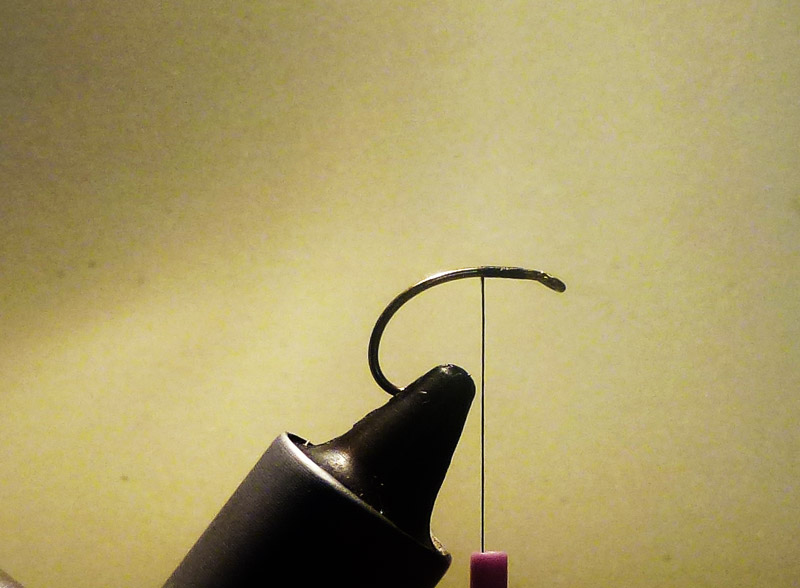
Tie on your Thread
Start by tying on your thread, for more imitative styles I use black 6/0 or 8/0 on smaller hooks, but you could use Red or Fire Orange to get a more attractor style head with a trigger point.
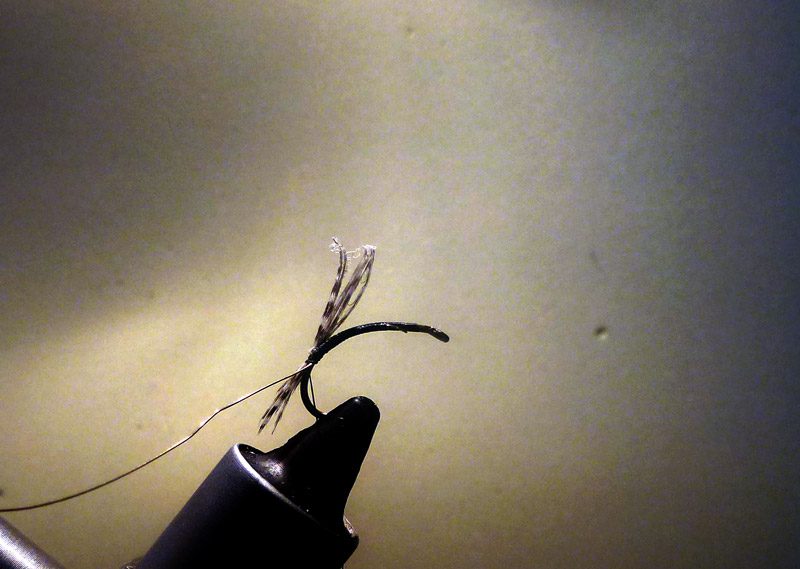
Tie in the Tailing fibres and the fine wire rib- gold used here
You are going to need a rib so as you wind down the hook towards the bend tie in some fine gold or copper wire, and wind to round the bend of the hook.
At the bend tie in a tail. I guess the best tailing matirial would be Coq de Leon fibres, but I don’t have these. Instead I have used strongly barred Teal fibres. I make the tail a little shorter than the body length of the fly, though not too short. Use 4-6 fibres, depeneding on how bushy you like your tails and how thick the fibres are, some fibres can be a little wispy to be useful.
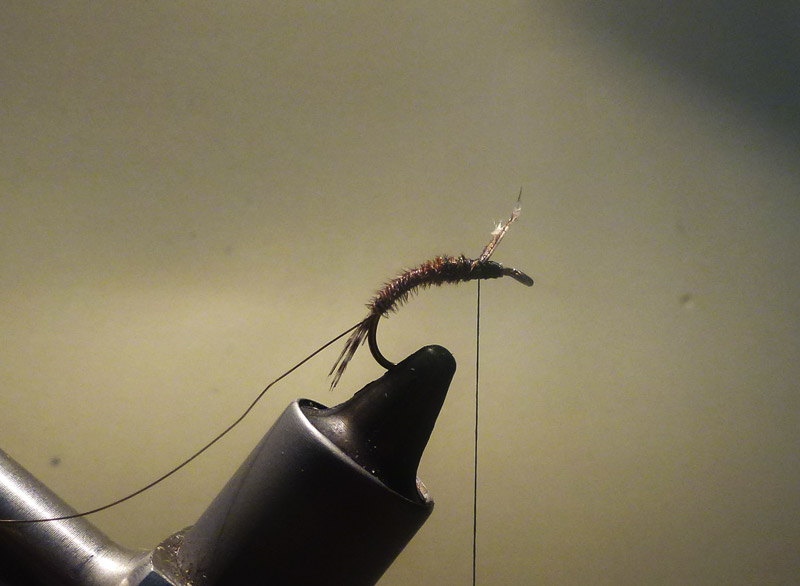
Tie in the Tail, and the Pheasant Tail fibres, 3 used here, and with the thread at the head make the body.
Wind the thread all the way back up towards the eye tying down the fibres, you want to keep the bulk up near the thorax end as you can build this up by folding over the waste ends to help build up a nice taper to the fly. Wind the thread back down to the tail, even up any thin sections on your hook, as I say, aiming for a nice taper. A finer thread will take more wraps but gives a slimmer profile.
Now tie in some Cock Pheasant Tail fibres, three should be sufficient, two on smaller flies. I use natural or black fibres but you can use any colour you wish, I would probably limit it to Olive and maybe Red.
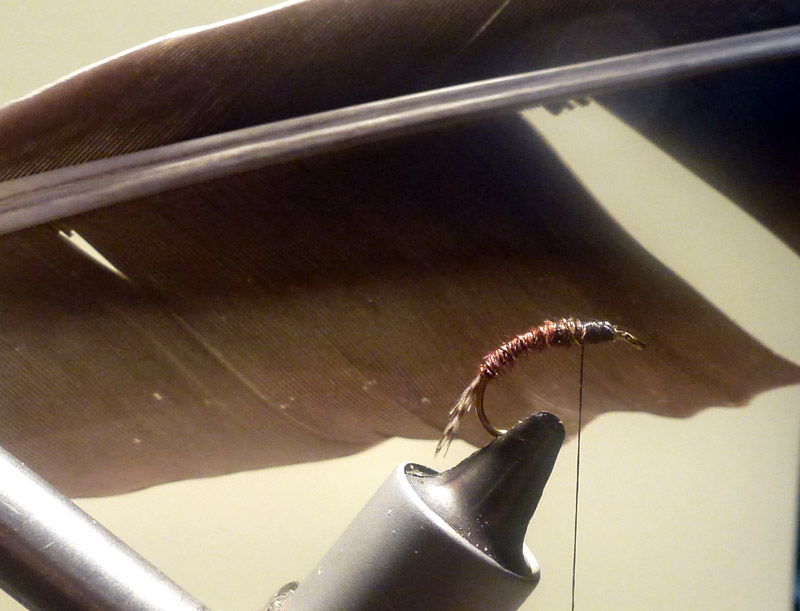
Secure the rib winding opposite to the Pheasant tail fibres then get a couple of fibres from a large feather – I think this might be Goose. You can use Pearlescent Mylar if you wish a bit sparkle.
Now wind the Pheasant Tail fibres up towards the eye and about 2-3 mm short of the eye, closer on smaller flies, tie off.
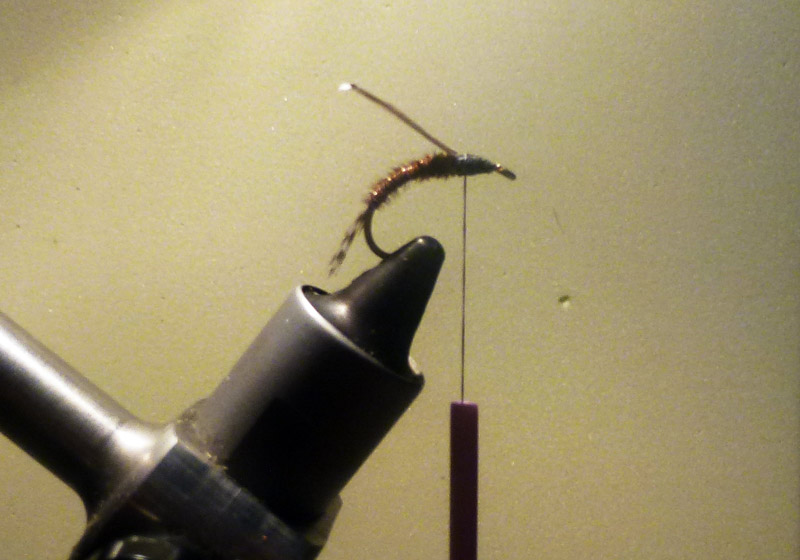
Tie in the Thorax fibres
Tie in a thorax cover, for more imitative styles I use a few fibres from a duck or goose feather, the base end of the fibres is about the right thickness. If you want something with a bit more flash substitute this with wide pearlescent Mylar or a strip of Pearl Film. Wax your thread and dub some spiky dubbing on, I use Fox Squirrel on my natural coloured flies, and Gray Squirrel on my black ones, just a preference!
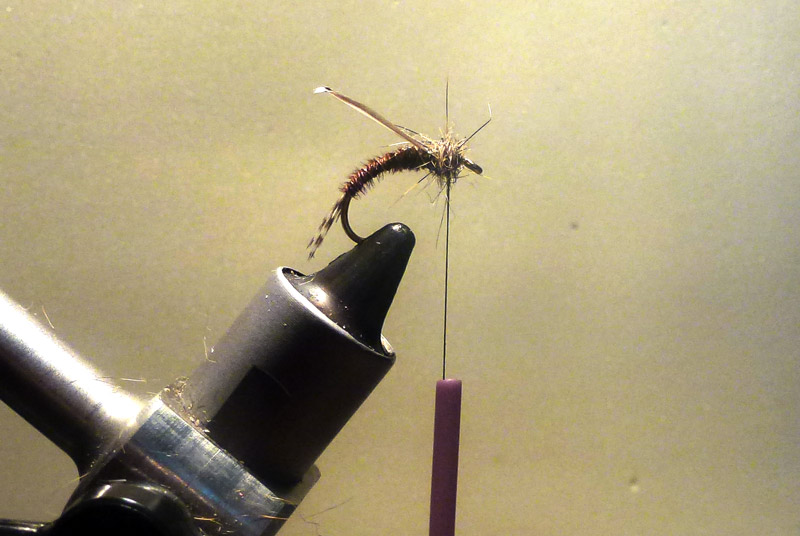
Dub on the Thorax using spiky dubbing material, I used Fox Squirrel here.
Don’t be shy with the dubbing but try to get it tightly dubbed onto the thread and wind it round building up a good size thorax.
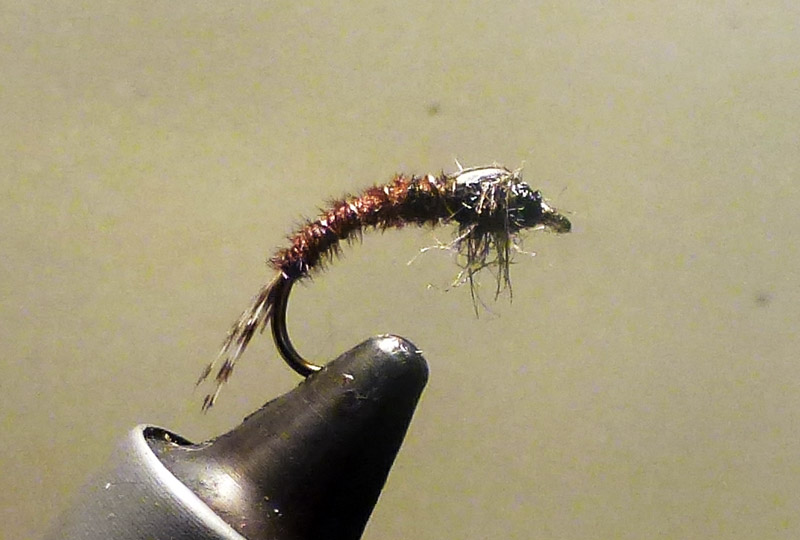
The finished fly, tease out the dubbing beneath the thorax cover for a leggy buggy look.
Finish with the thread to the eye of the hook and pull over the thorax cover and tie down tightly, picking up any loose straggly bits and getting a nice head before tying off, and varnishing.
The final important stage is to pick out the dubbing with a dubbing needle, trying to achieve a leggy, buggy effect under the fly.
There you have it the Unfamous PTN!